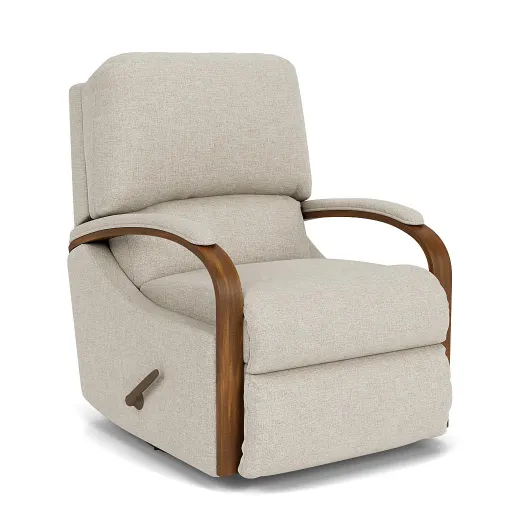
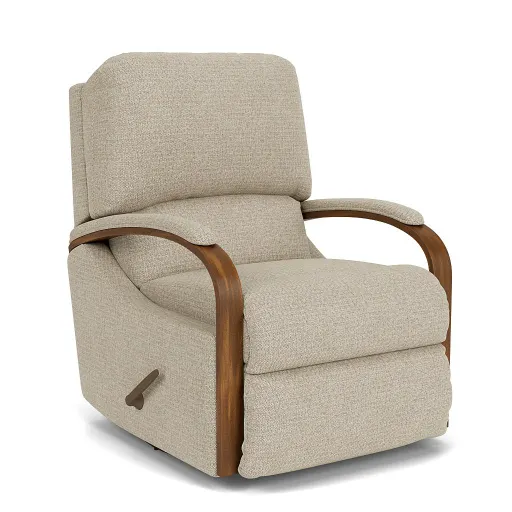
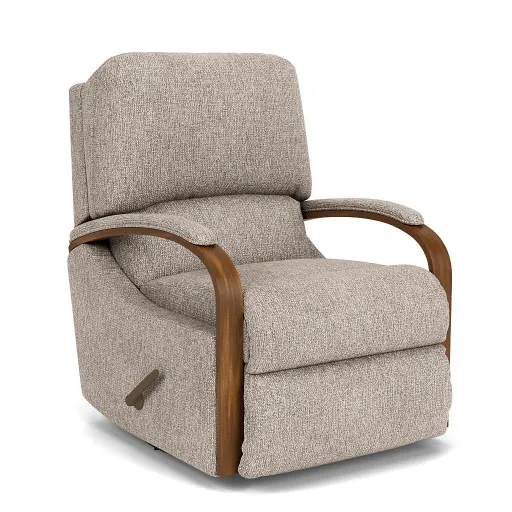
$1,479.99
Garza
Recliners are the one seat in the house people fight over — the difference between watching a film and sinking into it. They range from a single wall-hugger chair to full home-theatre rows with powered headrests and USB charging. Browse the full range below and use Furnzy to compare recliners from local retailers before you commit to a seat you'll spend years in.
A recliner is a chair or sofa whose back tilts and footrest extends so you can lean from upright to nearly flat. The reclining mechanism is the part that matters most: a steel mechanism rated to your weight is what separates a recliner that still works in ten years from one that sticks or sags in two. Everything else — the upholstery, the headrest, the cup holders — sits on top of that mechanism.
Recliners come as single chairs, two-seat loveseats, and full sofas, plus reclining sectionals for media rooms. The trade-off is always space: a reclined chair can extend 65 to 70 inches from the wall, so where it goes matters as much as how it feels.
Every style below is available to browse and compare across local retailers on Furnzy:
Measure the reclined footprint, not just the chair. A standard recliner needs 12 to 18 inches of clearance behind it and can reach 65 to 70 inches deep when fully open. If the wall is tight, a wall-hugger reclines forward and needs only a few inches. On Furnzy, you can filter recliners by type and dimensions across local retailers, so you only compare seats that actually fit where you want to sit.
Decide power or manual early — it changes everything else. Power gives you infinite positions, a powered headrest for your neck, and adjustable lumbar, at a higher price and a dependence on a working motor and a nearby outlet. Manual is simpler, cheaper, and has nothing electronic to fail. For a daily home-theatre seat, power earns its cost; for an occasional chair, manual is plenty.
Support is what you actually feel. Look for a chaise-pad footrest with no gap behind the knees, lumbar support that meets your lower back, and — on taller frames — a headrest that reaches your neck. A power headrest matters most for screen viewing, where a fixed headrest pushes your head forward.
Match the mechanism to your weight and use. Check the weight rating and ask whether the mechanism is steel. A reclining seat used daily by a heavier adult needs a sturdier mechanism than a guest-room chair — this is the spec that predicts how long it lasts.
This is the decision that drives the price and the feature list — settle it before you compare anything else.
Power recliners stop at any position, commonly add a power headrest and lumbar, and reduce the effort to recline to a button press. The cost: a higher price, reliance on a motor that can eventually fail, and a power cord that needs an outlet nearby.
Manual recliners use a lever or your own weight, cost less, and have no electronics to break. The cost: fixed recline stops and the physical effort to push back, which can be awkward for some users.
| Type | Positions | Price Range | Best For |
|---|---|---|---|
| Manual | 2–3 fixed | $300–$900 | Occasional use, simplicity, budget |
| Power | Infinite | $700–$2,500 | Daily use, home theatre, neck/back support |
Choose power if the recliner is a daily seat or a home-theatre chair where headrest and lumbar control matter. Choose manual if it's used occasionally and you'd rather not depend on a motor.
Once you've settled on power or manual, Furnzy lets you compare recliners filtered by type, feature, and price across local retailers side-by-side — so you're only evaluating seats that match your decision, with availability visible across multiple stores before you spend an afternoon testing chairs in person.
Home-theatre and media-room builders get the most from power reclining seats — ideally in a row with consoles, cup holders, and power headrests. The adjustable headrest is what keeps a two-hour film comfortable rather than a neck strain.
Anyone with a tight room should look at wall-huggers. They deliver a full recline in apartments and small living rooms where a standard recliner would block a walkway when open.
People managing back, neck, or mobility needs benefit from power lumbar, power headrests, and lift mechanisms that ease the work of sitting down and standing up.
Readers and new parents are the natural fit for rocker and glider recliners — gentle motion upright, full support when it's time to rest.
Recliner mechanisms, power features, and reclined dimensions vary widely across retailers — and they're rarely spelled out in a product photo. Furnzy brings local retailer options together so you can compare type, features, and footprint side-by-side before visiting a store, instead of discovering the differences seat by seat in person.
Choosing a recliner means weighing reclined footprint, power versus manual, mechanism quality, support features, and upholstery — across retailers who each stock a different range. Furnzy brings local retailer inventory together in one place, so you can compare those variables side-by-side, narrow your shortlist to the seats that genuinely fit your room and your body, and walk into one store instead of five.
Get three things right — the reclined footprint, the power-or-manual call, and the mechanism rating — and a recliner stays comfortable for years instead of becoming the chair nobody trusts. Browse the range on Furnzy, compare what local retailers actually stock, and walk into a showroom knowing exactly which seat to drop into first.
No filters selected
$1,479.99
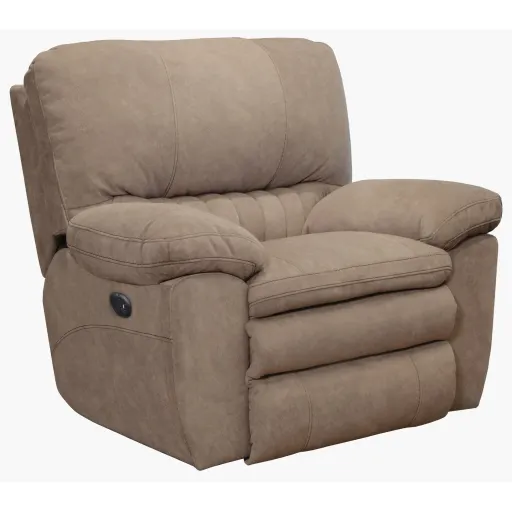
$999.95
$1,347.00
$927.00
$2,529.95
$422.76$349.73
$763.64$631.73
$435.65$360.40
$1,295.00
$617.78$511.07
$987.00
$1,450.00
Showing 1825 to 1848 of 3,168 results